
Hotel Cancellation Insights & Revenue Optimization
Analysis of 119,390 hotel bookings to identify factors driving cancellations and provide actionable strategies to improve hotel revenue.
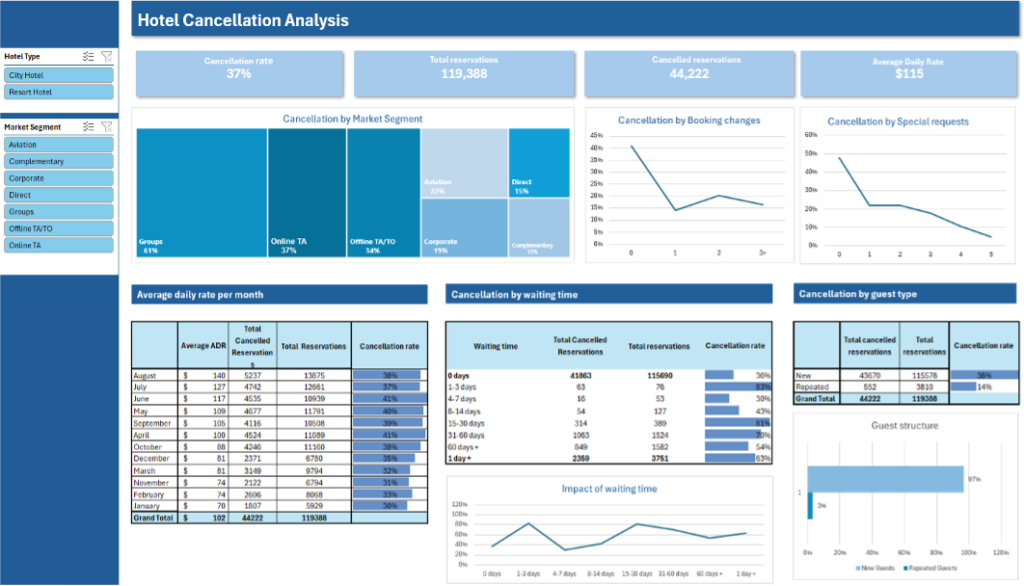
Objective
This project delves into the analysis of hotel booking cancellations, aiming to uncover the key factors that significantly impact the cancellation rate. The dataset includes data from two hotels, enabling a more comprehensive analysis of cancellation patterns and influencing factors. By examining various attributes such as lead times, booking changes, and special requests, this analysis seeks to provide actionable insights that can help hotel management reduce cancellations and improve booking strategies.
Approach
- Collected and cleaned historical booking data from 2 hotels in Portugal (Algarve & Lisbon)
- Conducted Exploratory Data Analysis and correlation analysis in Excel
- Visualized key trends using charts, dashboards, and pivot tables
Derived actionable insights for revenue and booking strategy
Key Insights
Overall Cancellation Rate: 37% of bookings were cancelled, indicating a significant impact on revenue and the need for targeted mitigation strategies.
Group Bookings: Despite lower average daily rates, group reservations experienced a 60% cancellation rate, highlighting a high-risk, low-margin segment.
Guest Loyalty: Repeat guests exhibited a markedly lower cancellation rate (14%), demonstrating the value of loyalty programs and retention initiatives.
Impact of Special Requests: Bookings with special requests showed reduced cancellation probability, suggesting that personalized guest experiences increase commitment.
Waiting List Effect: Extended waiting periods were strongly correlated with higher cancellation rates, emphasizing the need to manage waitlists efficiently to optimize occupancy.
Full Analysis
Overall Cancellation Rate

Between 2015 and 2017, a total of 119,390 reservations were made, with 44,224 of them being cancelled, resulting in a cancellation rate of 37%. This high percentage of cancelled reservations necessitates a thorough investigation of the influencing factors to reduce the cancellation rate in the coming years.
ADR vs Cancellation
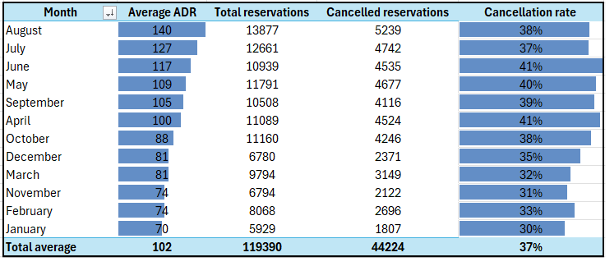
The average daily rate (ADR) varies throughout the year as demand fluctuates. During the high season, from May to September, the ADR is above average, while prices significantly decrease in winter. Surprisingly, the ADR does not significantly impact booking cancellations. Although the cancellation rate is slightly higher during the high season, it is not the determining factor.
For instance, in April, the ADR is below average, yet the cancellation rate is the highest. Conversely, July, the second most expensive month, has a cancellation rate around the average. Additionally, despite January’s ADR being half that of August, the cancellation rate does not show a corresponding decrease.
In conclusion, lowering the ADR is unlikely to improve performance, as guests do not seem to base their cancellation decisions on the price.
Market Segment Analysis
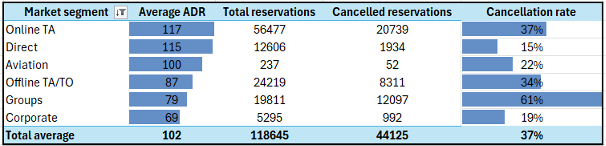
There is a significant variation in the average daily rate (ADR) across different market segments. Prices are highest for guests booking through online travel agents (OTAs) or directly with the hotel. However, this does not correlate with the highest cancellation rates. In fact, group reservations, which have the second lowest ADR, experience the highest cancellation rate, with over 60% of these bookings being cancelled. Conversely, the lowest cancellation rates are observed in direct bookings and corporate reservations.
This indicates that group reservations negatively impact hotel performance, as they not only generate lower income but also have the highest cancellation rates. Reducing group bookings could potentially improve overall performance. Groups tend to reserve a large number of rooms, which prevents other guests, who might generate more revenue, from making reservations.
Impact of Special Requests
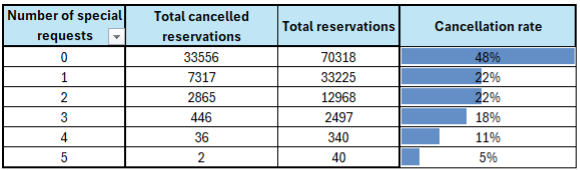
There is a clear correlation between the number of guests’ special requests and the cancellation rate. Reservations without special requests have the highest cancellation rate at 47.7%, which is 10 percentage points higher than the average. The cancellation rate decreases as the number of special requests increases. This indicates that personalized stays are less likely to be canceled, as guests may feel that their reservations perfectly meet their needs, reducing the likelihood of alterations
Booking Changes
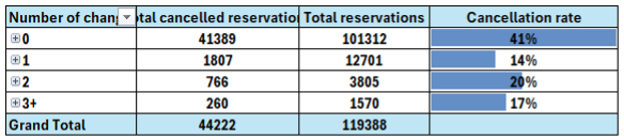
Most reservations remain unchanged, resulting in a cancellation rate similar to the average (41% vs. 37%). However, if guests decide to alter their booking once, the likelihood of cancellation decreases significantly to 14%. Interestingly, reservations with more than one change tend to be cancelled slightly more frequently.
Waiting List Analysis
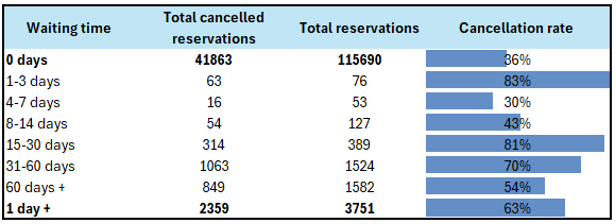
The time spent on the waiting list appears to significantly impact the cancellation rate. When guests do not have to wait, the cancellation rate is around the average, as most bookings are confirmed immediately. However, although the percentage of guests on the waiting list is small, their cancellation rate is concerning. Over 60% of guests on the waiting list end up cancelling their booking.
Interestingly, the cancellation rate varies with the duration of the wait. The highest cancellation rates (over 80%) are seen among guests who wait 1-3 days and 15-30 days. In contrast, those who wait between these periods have a much lower cancellation rate of 30-43%. Additionally, after waiting more than 30 days, the cancellation rate slightly decreases again.
In summary, reducing the number of guests on the waiting list should be a priority for hotel management. If this is not feasible, minimizing the waiting time to 14 days could lead to better hotel performance.
New vs Returning Guests

During the examined years, 97% of the reservations were made by new guests, which means the average cancellation rate of 37% is largely influenced by them. Bookings made by returning guests account for only 3% of the total, and their cancellation rate is just 14%. This indicates that hotels should focus on maintaining good relationships with their guests, as it leads to greater loyalty and improved hotel performance.
Summary: How to lower the Cancellation Rate?
1. Optimize Group Booking Policies
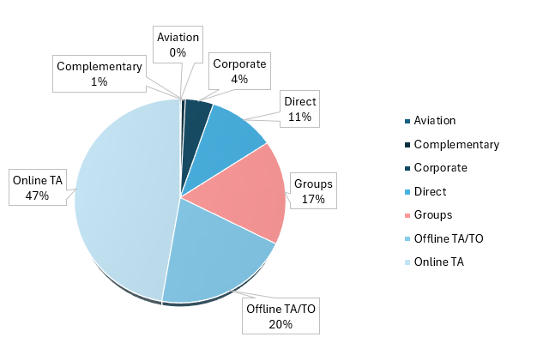
Group bookings account for 17% of all reservations. As highlighted in the report, these bookings are cancelled 60% of the time and have the second lowest average daily rate (ADR). Consequently, they are not profitable for hotels. Group bookings also prevent other guests, who tend to cancel less frequently and pay higher rates, from making reservations. Reducing the number of group bookings could enhance overall hotel performance by allowing more profitable reservations to be made.
2. Enhance Guest Loyalty Programs
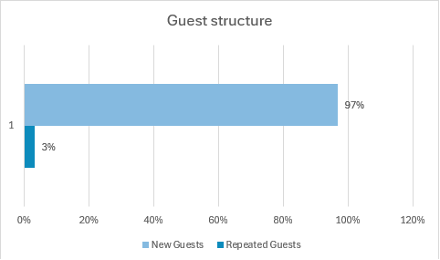
Research indicates that guests who have previously stayed at the hotel tend to cancel their reservations less frequently, with a cancellation rate of around 14%. However, these returning guests represent only 3% of the total guest population. Hotels should prioritize maintaining positive relationships with guests and fostering loyalty to encourage repeat visits. This can be achieved by implementing loyalty programs and offering lower rates for returning guests.
3. Minimize Waiting List Duration
Waiting lists appear to negatively impact hotel performance. As highlighted in the report, guests who wait 1-3 days for their reservation are 80% likely to cancel. Similarly, guests who remain on the waiting list for more than two weeks, particularly between 15 and 30 days, also have high cancellation rates. Reducing waiting times could be achieved by eliminating less profitable customers. For instance, reducing group reservations could free up more availability for other guests, thereby lowering waiting times and, consequently, the cancellation rate.